
Jason, Coming of Age
Play Jason, Coming of Age
Jason, Coming of Age Screenshots












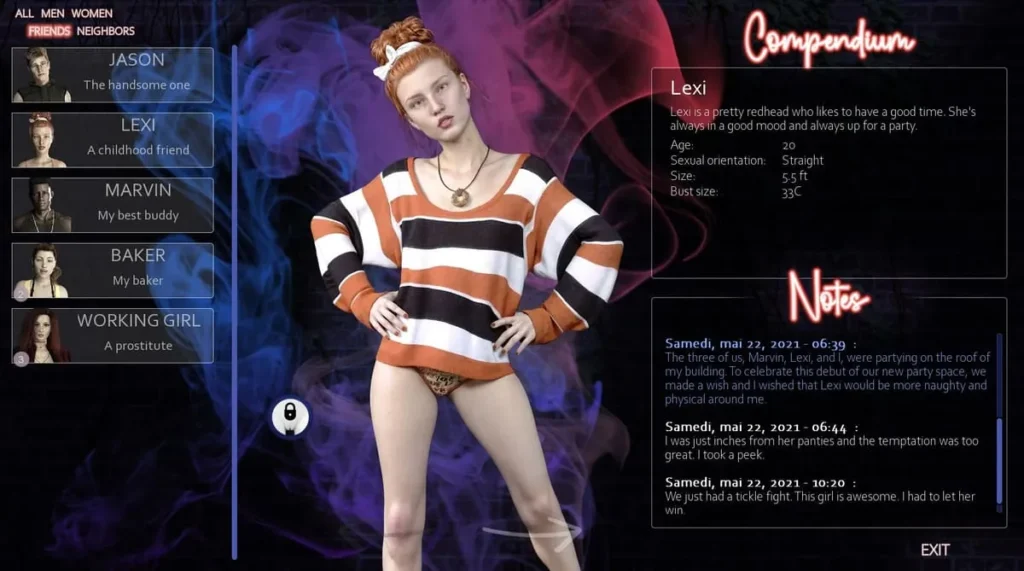






Jason, Coming of Age review
Explore choices, relationships, and gameplay mechanics in this adult visual novel
Jason, Coming of Age is an adult visual novel that launched in October 2025, offering players an immersive experience as a 25-year-old protagonist navigating love, relationships, and personal growth. This game stands out in the visual novel genre by emphasizing player choice and personalization, allowing every decision to shape your unique story. Whether you’re interested in understanding the game’s core mechanics, exploring relationship dynamics, or learning about customization options, this guide covers everything you need to know about this choice-driven adventure.
Core Gameplay Features and Mechanics
At its heart, Jason, Coming of Age is an experience built on the profound power of your decisions. Forget linear stories with predetermined endings; here, you are the author. 🎮 Every click, every conversation, and every choice you make isn’t just a momentary blip—it’s a stone cast into the pond of Jason’s life, creating ripples that reshape his relationships, opportunities, and future. The core Jason Coming of Age gameplay mechanics are designed for one purpose: to make you feel like you’re living an authentic, responsive life, not just reading a script.
This isn’t a game about solving a puzzle or reaching a single “good” ending. The goal is pure immersion in a story that you shape. Whether you’re nurturing deep, emotional connections or exploring more casual adventures, the game’s systems adapt to you. It’s this flexible, player-driven approach that defines the Jason, Coming of Age experience. Let’s break down the key systems that make this possible.
How Choice-Driven Storytelling Works
The narrative engine of Jason, Coming of Age is its sophisticated choice-driven visual novel framework. Think of it less like a book with alternate pages and more like a living ecosystem where your actions are the climate. 🌱 Every major and seemingly minor decision feeds into a complex web of character flags and story variables.
For instance, early on, you might be invited to a casual party. Your decision to attend or skip it isn’t just a binary “scene played/scene missed.” If you go, you might connect with a character who becomes a central love interest, overhear a piece of gossip that unlocks a side quest later, or establish a reputation for being social. If you skip it, a different character might notice your absence and reach out, creating a more intimate, one-on-one opportunity that wouldn’t have happened otherwise. This is the essence of a true branching narrative visual novel—paths aren’t just parallel; they diverge, converge, and create entirely unique narrative landscapes.
Pro Tip: Don’t stress about “perfect” choices on your first playthrough. Part of the magic is seeing how different decisions lead to surprising outcomes. That “awkward” response might endear you to someone in a way a “smooth” line never could!
The dialogue system is particularly reactive. Characters remember your attitudes, your promises, and your flirtations. If you consistently support a friend’s ambitions, they’ll confide in you more deeply. If you play the field without discretion, word might get around, affecting how new characters perceive Jason upon meeting him. I remember in one of my playthroughs, I made a flippant comment about art to a seemingly minor character. Hours later, that offhand remark became the key to unlocking a deeply personal storyline with them because it showed a side of Jason they connected with. The game doesn’t just track big plot points; it listens to who you are in the small moments.
Preference Customization and Adaptation Systems
Now, you might be thinking, “With so many paths, how do I steer the experience toward what I enjoy?” This is where the genius of the preference customization system shines. 🛠️ Right at the start, the game presents you with a comprehensive but unobtrusive menu to set your initial preferences. You can define Jason’s sexual orientation, indicate certain content types you’d rather avoid, and even hint at specific fantasies or relationship dynamics you find interesting.
Here’s the crucial part: this system is a guide, not a cage. It gently nudges the game’s content generation and scene suggestions in your preferred direction, helping to curate the world without removing your agency. Let’s say you set a preference for more dominant partners. The game might naturally present more opportunities where characters exhibit those traits, or frame certain interactions in a light that aligns with that dynamic. However, it never locks you out of other relationships. You maintain the absolute freedom to pursue any character or explore any story thread that catches your eye during play. The preference customization system is about shaping your playground, not building walls around it.
This adaptive design ensures the Jason Coming of Age gameplay mechanics serve the player, not the other way around. It respects your time and interests while preserving the thrill of discovery and the authenticity of organic relationship building. You’re not just picking from a list of pre-written scenarios; you’re telling the game what kind of story you’re in the mood for, and it weaves those elements into the rich, branching tapestry of the world.
Time Management and Interactive Elements
Life isn’t a series of back-to-back cutscenes, and neither is Jason, Coming of Age. A huge part of the immersion comes from its brilliant approach as a time management visual novel. 🗓️ The game world operates on a coherent calendar and clock. Scenes are time-stamped, events happen on specific days, and your choices of how to spend your time are the most fundamental decisions you make.
Will you spend your Tuesday afternoon studying at the library (potentially boosting Jason’s skills and running into a brainy love interest), working a part-time job to earn money for gifts and dates, or hitting the gym to improve Jason’s physique and confidence? Each action consumes time and opens different doors. This structure creates a wonderful sense of realism and stakes. You can’t do everything in one week, forcing you to prioritize what—and who—matters most to you in this particular story.
Your phone is your central hub for this time management visual novel experience. It’s constantly updating with:
* New message threads from characters, which can lead to immediate mini-scenes or plan future meetups.
* Social media feeds that offer glimpses into other characters’ lives and can trigger events.
* A calendar showing upcoming mandatory events and social invitations you’ve received.
This is seamlessly tied to the interactive relationship tracking system. The game meticulously logs every interaction, but it doesn’t reduce relationships to a simple “affection number.” Instead, it tracks a matrix of variables: trust, romance, dominance/submission, friendship, and more, depending on the character. You can check this stat screen to get a nuanced read on where you stand. Did your last date with Alex increase romance but slightly decrease trust because you were evasive about a question? The tracker will show that, helping you understand the complex consequences of your role-playing.
The balance between this structured time management and the open world is perfected in the free-roam gameplay segments. These are moments, often in central hubs like the college campus or downtown area, where you directly control Jason’s movement. You can explore at your own pace, choose which buildings to enter, and decide which characters to approach. Seeing the world in this way, and choosing your path through it literally and figuratively, deepens the immersion immensely. These free-roam gameplay segments are where spontaneous, unscripted-feeling moments often occur, turning a routine day into a memorable chapter in your unique story.
To visualize how these core systems work in harmony, here’s a breakdown:
| Gameplay System | How It Functions | Player Impact |
|---|---|---|
| Choice & Branching Narrative | Dialogue and action choices set persistent character and plot flags, creating a unique story path. Scenes adapt based on past decisions. | You author the plot and define Jason’s personality. Every playthrough can yield a radically different story and ending. |
| Preference Customization | Initial setup menu filters and suggests content aligned with your tastes. The game adapts scene framing and opportunity frequency. | You curate the tone and focus of your adventure without losing the freedom to explore outside your preset preferences. |
| Time Management & Tracking | A live calendar and clock govern the world. Your phone updates with messages and events. Actions consume time units. | You prioritize daily activities, managing resources (time, money) and creating authentic opportunity costs. Missing an event has real consequences. |
| Interactive Relationship Tracking | A detailed stat screen monitors multi-faceted variables (trust, romance, etc.) for each character based on every interaction. | You get transparent, nuanced feedback on your relationships, allowing for strategic planning or role-played correction of mistakes. |
Ultimately, the Jason Coming of Age gameplay mechanics are a masterclass in player agency. By combining a profound choice-driven visual novel foundation with a respectful preference customization system, the structured reality of a time management visual novel, transparent interactive relationship tracking, and the liberty of free-roam gameplay segments, it delivers on the promise of a truly personalized branching narrative visual novel. Your story awaits, and it will be unlike anyone else’s.
FAQ: Your Choices in Jason, Coming of Age
Q: If I make a “bad” choice, can I ruin my entire playthrough?
A: Not at all! The game is designed around the authenticity of life’s ups and downs. A strained relationship can often be mended with time and different choices, and sometimes a “bad” outcome leads to a fascinating, unexpected story branch you wouldn’t have seen otherwise. There are no dead ends, only different paths.
Q: How does the game handle multiple romance options? Is there a “harem” route?
A: The game’s structure is flexible. While you can pursue multiple relationships simultaneously, characters have their own feelings and agency. Some may be open to unconventional arrangements, while others might demand exclusivity. Navigating these expectations is a core part of the relational gameplay. The story adapts to the complex web you weave.
Q: Do I need to min-max my time management to succeed?
A: Absolutely not. “Succeeding” is defined by your enjoyment of the story. While being strategic with your time can unlock certain events or skill boosts, a more relaxed, spontaneous approach often leads to wonderful, unplanned moments. Play the role of Jason as you feel he would live, not as a spreadsheet.
Q: Can I completely ignore the main storyline and just explore?
A: To a large degree, yes. The overarching narrative provides structure and major events, but the game is built to accommodate deep exploration of side characters and activities. You might miss some major plot triggers if you ignore them indefinitely, but you can certainly spend many hours crafting a story focused on Jason’s personal life and relationships apart from the central plot.
Jason, Coming of Age delivers a unique visual novel experience that prioritizes player agency and personalization above all else. From its sophisticated choice system that creates meaningful ripple effects throughout the narrative to its extensive customization options for relationships and content preferences, the game offers something for diverse player interests. The combination of free-roam exploration, multiple love interests, time management mechanics, and relationship tracking creates an immersive world where your decisions genuinely matter. Whether you’re drawn to the game for its relationship dynamics, story flexibility, or interactive features, understanding these core systems will help you craft your ideal experience. If you’re considering diving into Jason, Coming of Age, remember that the game’s greatest strength lies in its commitment to player freedom and the ability to shape your own unique story through meaningful choices.